With 105 days to go until the Glasgow 2026 Commonwealth Games, excitement is building – and the countdown has got us thinking about one of sports most powerful assets: the mascot.
Mascots have been part of sporting culture for well over a century. What began as simple team symbols has evolved into something for more significant. Today, mascots are fully fledged brand properties, capable of driving revenue, building communities, and carrying the identity of a team or event to audiences around the world.
Sporting teams led the way, but in recent decades major events have followed. The Olympic Games, FIFA World Cups, Commonwealth Games and more have all invested heavily in mascot development, recognising that a well-crafted character can do something a logo or colour palette simply cannot: make people feel something.
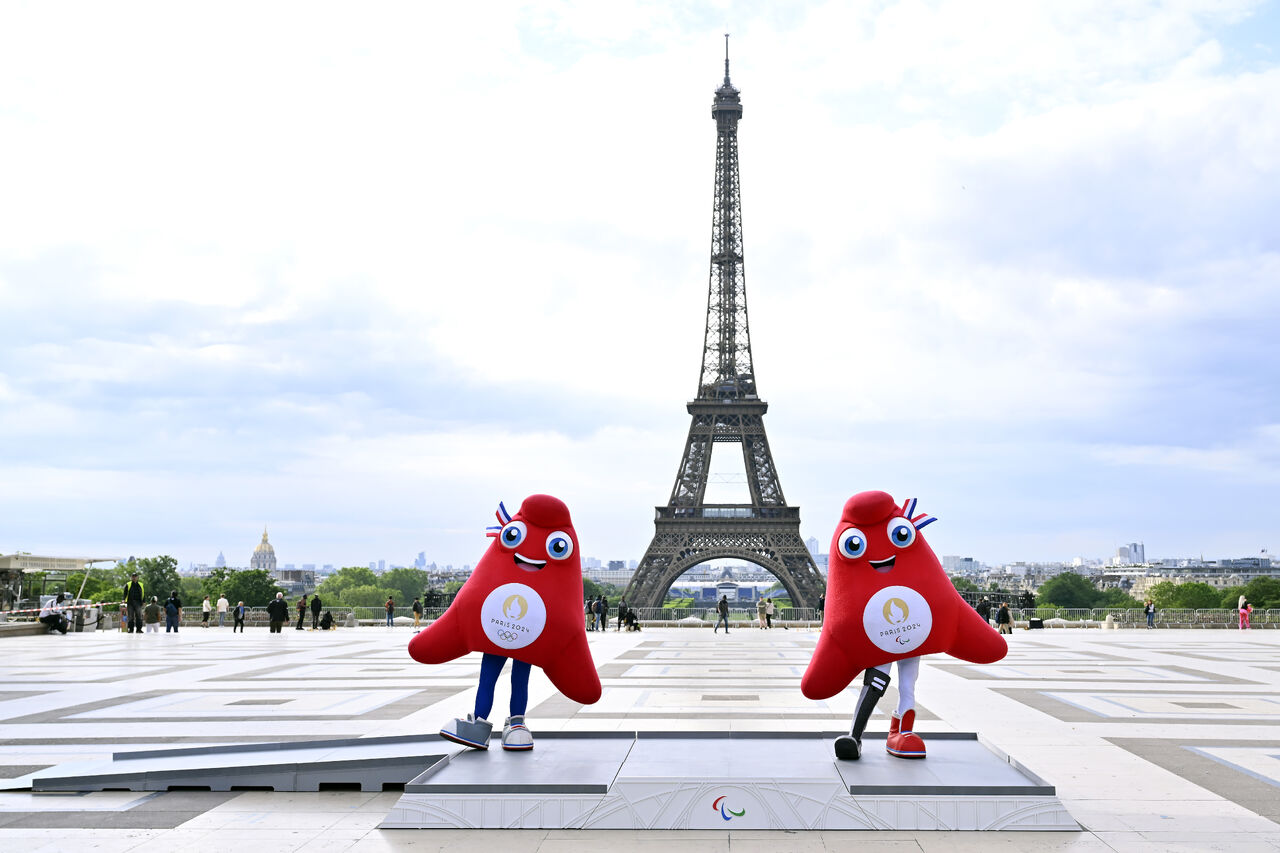
Recently the power of the mascot was visible at the Paris 2024 Olympic Games. The plush toy version of the Phryges – the Games’ iconic mascot – became the best-selling item of the entire event. People reportedly queued around the block, five streets back, every single day to get their hands on one. In total, an estimated 2.3 million Phryges plush toys were sold, generating over €100M in sales.
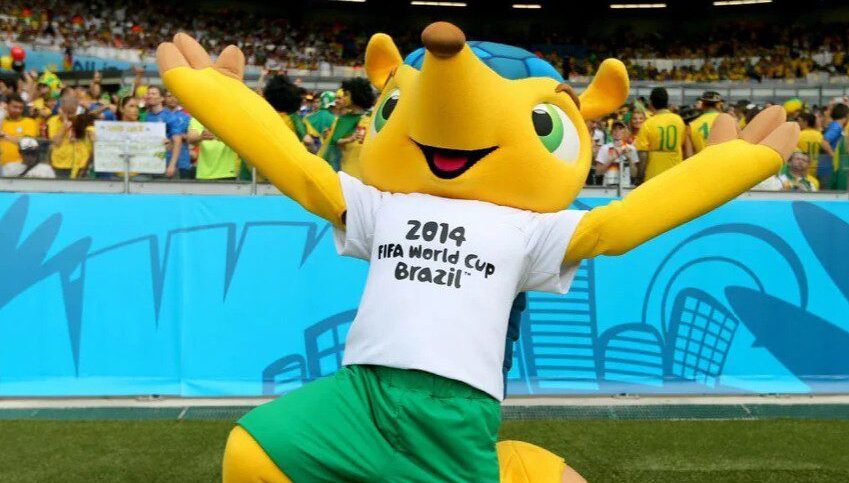
But Paris is far from an isolated case. Fuleco, the armadillo mascot of the 2014 FIFA World Cup in Brazil, became one of the most commercially successful mascots in the tournament’s history. Wenlock and Mandeville from London 2012 helped drive record Olympic merchandise sales and became genuinely beloved figures for a generation of young fans. The pattern is consistent: invest in a great mascot, and the returns, commercial and cultural, follow.
Research backs this up. Campaigns using mascot and character-led assets can increase both profit and emotional connection with customers by up to 41%. Meanwhile, 49% of 18-to-24-year-olds say advertising during major sporting events stands out to them — and mascots are uniquely placed to reach and resonate with that audience.
Mascots work so well because at their core, mascots are a neutral, joyful entry point into a sport or event. They are accessible in a way that athletes, clubs, and even national teams sometimes aren't. A child who doesn't yet understand the offside rule can still love a mascot. A casual fan who isn't tribal about a particular team can still feel warmth towards a character. A global audience who might find sport intimidating can be drawn in by something fun, familiar, and human.
A recent article by Mike Perry describes mascots as the "next frontier in the world of sport branding" - and this emotional accessibility is a huge part of why. A survey on today’s brand landscape makes it clear: teams aren’t just competing on the pitch anymore. They are competing for likes, scrolls and merch sales. Mascots are emerging as one of the most powerful brand assets available to teams and events alike
The smartest sports brands are already capitalising on this - and nowhere is it more visible than on social media.
@offthepitch_archive captured it well – mascots bring identity and energy to the pitch in a way few other elements can. In many cases a mascot's own social account shows more personality, warmth, and creativity than the team's main page. They can say things, do things, and be things that official club communications simply can't.
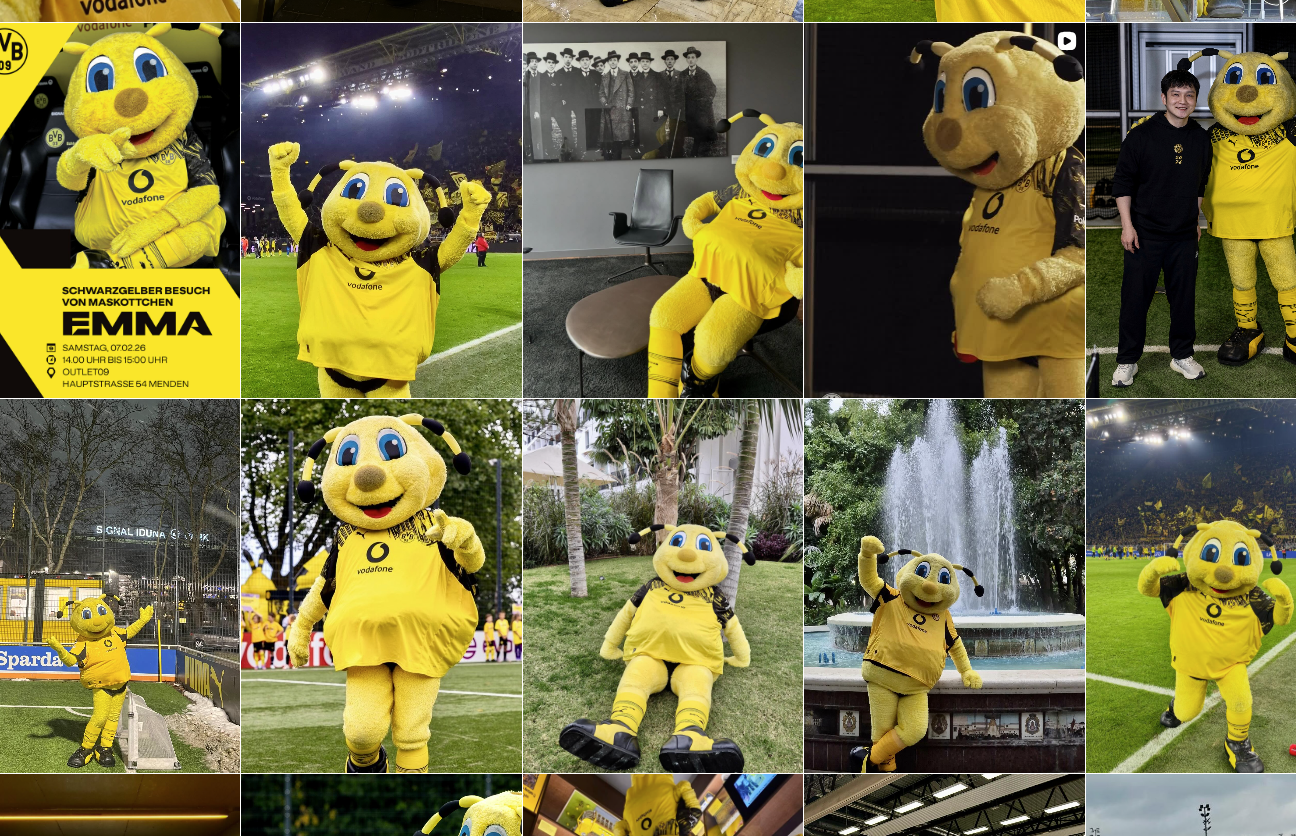
One account we've been loving recently is @maskottchenemma - Borussia Dortmund's mascot Emma, who has an impressive following of over 130k, landed brand partnerships, and built a genuinely engaged community through storytelling and character-led content. This goes far beyond a flat animation; it's a living, breathing extension of the club's identity that connects with fans on a human level.
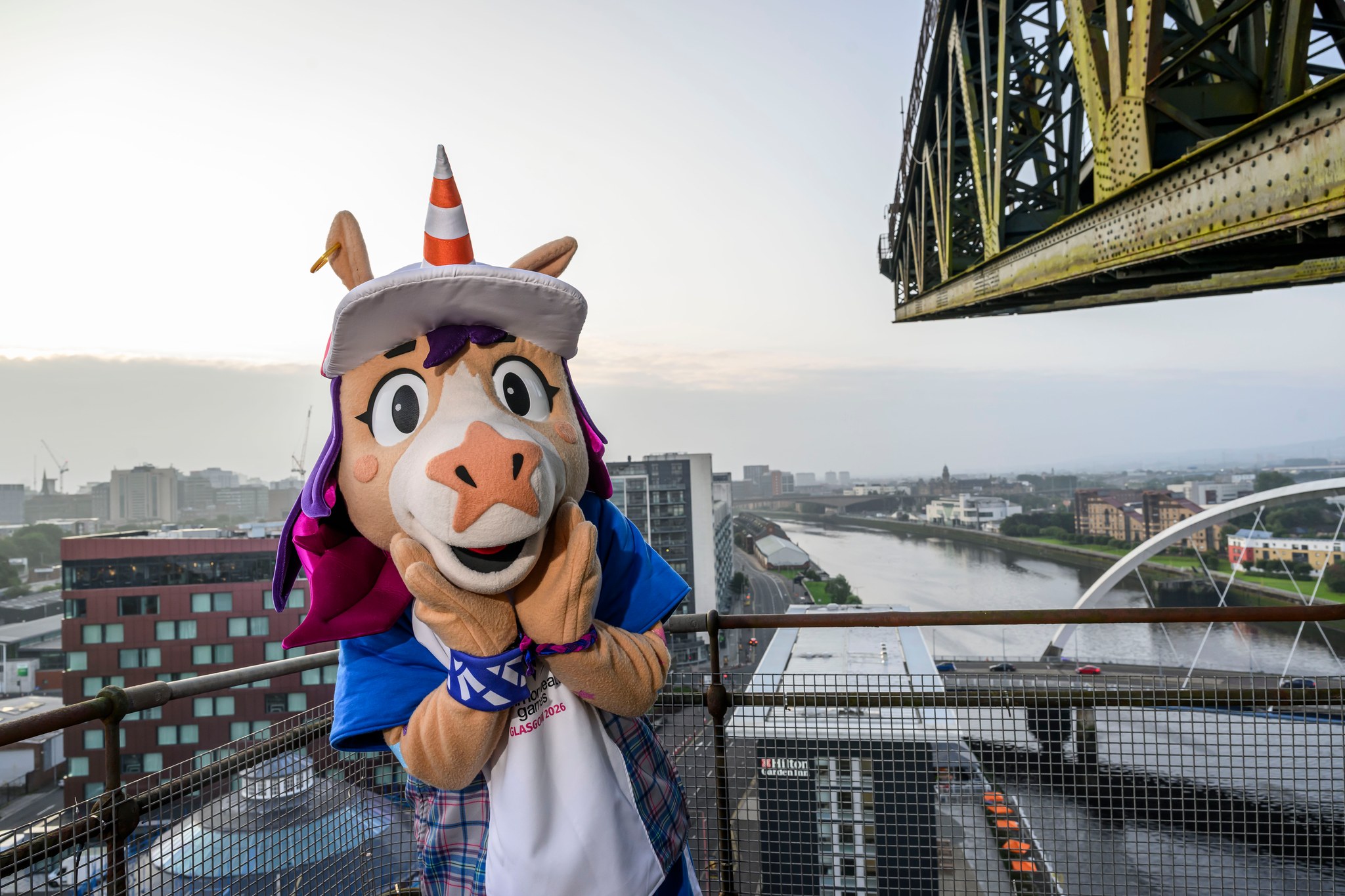
Closer to home, @glasgow_2026 have been ahead of the curve. They began posting about their mascot Finnie well ahead of the Games, giving themselves plenty of runway to build awareness, establish Finnie's personality, and create genuine excitement. Since then, they've launched plush toys as an additional revenue stream and used Finnie to engage with sporting influencers - extending the mascot's reach well beyond the official channels.
It's a smart, considered approach that shows exactly what's possible when a mascot is treated as a central strategic asset rather than an afterthought.
Sporting teams have known the value of mascots for decades. But with major events now fully embracing the opportunity - and the numbers proving both the commercial and cultural case - we're entering a new era for mascot-led marketing. The most forward-thinking brands aren't asking whether they need a mascot. They're asking how to make theirs work harder.
As a company that lives and breathes mascots, this is the conversation we've been part of for years. We know what makes a great mascot, what makes one last, and what makes one resonate far beyond the event or team it was created for. With Glasgow 2026 just around the corner, we can't wait to see what Finnie does next - and we're excited to keep helping sports brands unlock their full power.
Unit 3 & 4,
Greenlea Park
Prince Georges Road
London
SW19 2JD
UK

